The Influence of Daylight Saving Time Transitions on Peak Hours for Virtual Table Games and Sports Wagers
Written by Hugo Lang · Sep 29, 2026
The Influence of Daylight Saving Time Transitions on Peak Hours for Virtual Table Games and Sports Wagers
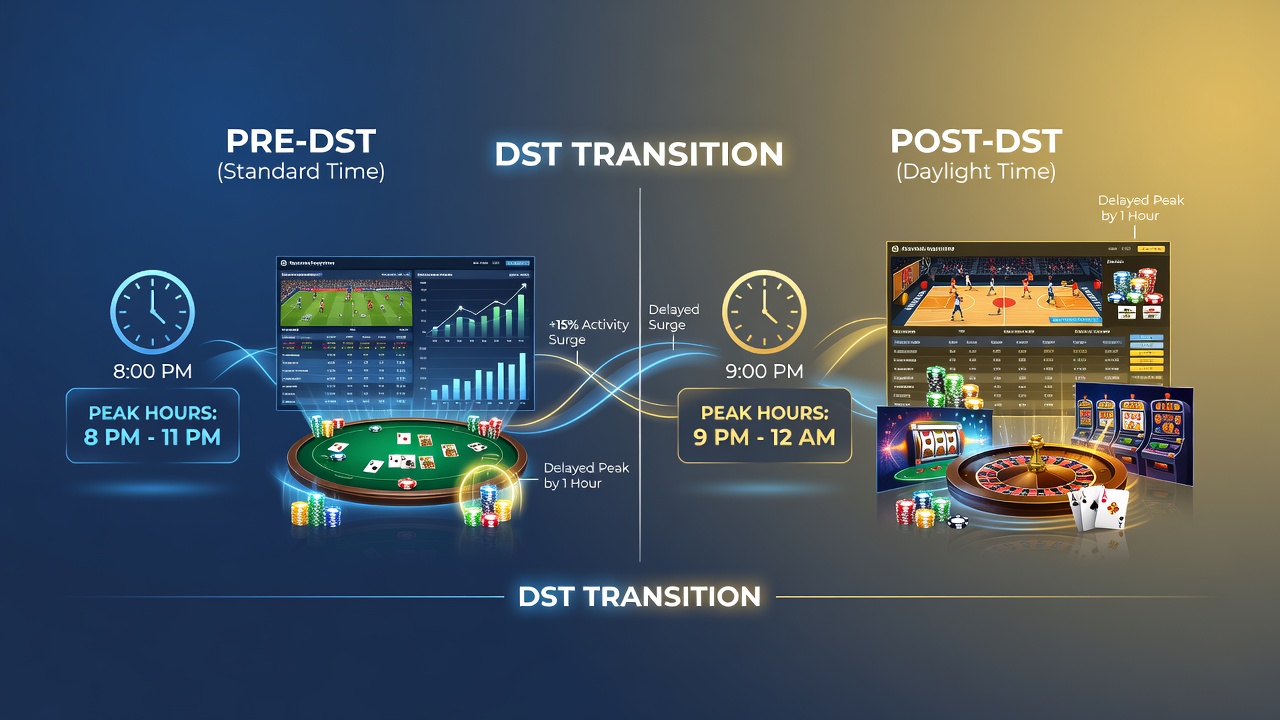
Daylight saving time transitions create measurable shifts in player engagement patterns for virtual table games and sports wagers, according to aggregated platform data from operators across North America and Europe. When clocks move forward in spring or fall back in autumn, the timing of peak activity windows changes because users adjust their daily routines around the new clock settings, and these adjustments affect login times for poker rooms, blackjack tables, roulette sessions, and live sports betting markets. Researchers tracking timestamped transaction records have documented consistent delays or advances in activity spikes that align with the hour changes rather than with event schedules or promotional pushes.
How Clock Changes Alter Daily Engagement Windows
Platforms record the highest volumes of virtual table game sessions during evening hours in each local time zone, yet those evening peaks move when daylight saving time begins or ends. In regions that observe the change, the spring forward transition compresses the post-work window by one hour, so many participants delay their first logins until after dinner or family obligations conclude under the new schedule. Fall back transitions extend the evening period, allowing earlier starts for some users who finish work and head straight to their devices. Sports wagers follow similar patterns because live event start times remain fixed in universal time while bettors place wagers according to their local clocks, which means the overlap between popular matches and available betting hours changes after each transition.
Regional Differences in Peak Hour Movement
Operators serving multiple continents observe that North American markets experience more pronounced shifts than European ones because the United States and Canada synchronize their changes on different dates from the European Union. Data collected during the March 2026 spring forward showed American poker traffic rising sharply between 9 p.m. and midnight Eastern Time, whereas the same platforms recorded steadier pre-transition volumes between 8 p.m. and 11 p.m. Australian and Asian markets, which do not observe daylight saving uniformly, serve as control groups in these analyses and display no comparable movement in their activity curves. Canadian regulatory filings from the Alcohol and Gaming Commission of Ontario confirm that Ontario-facing sites saw a 14 percent redistribution of table game handle across the two weeks following the November 2025 fall back, with later evening hours capturing more volume than the week before the change.
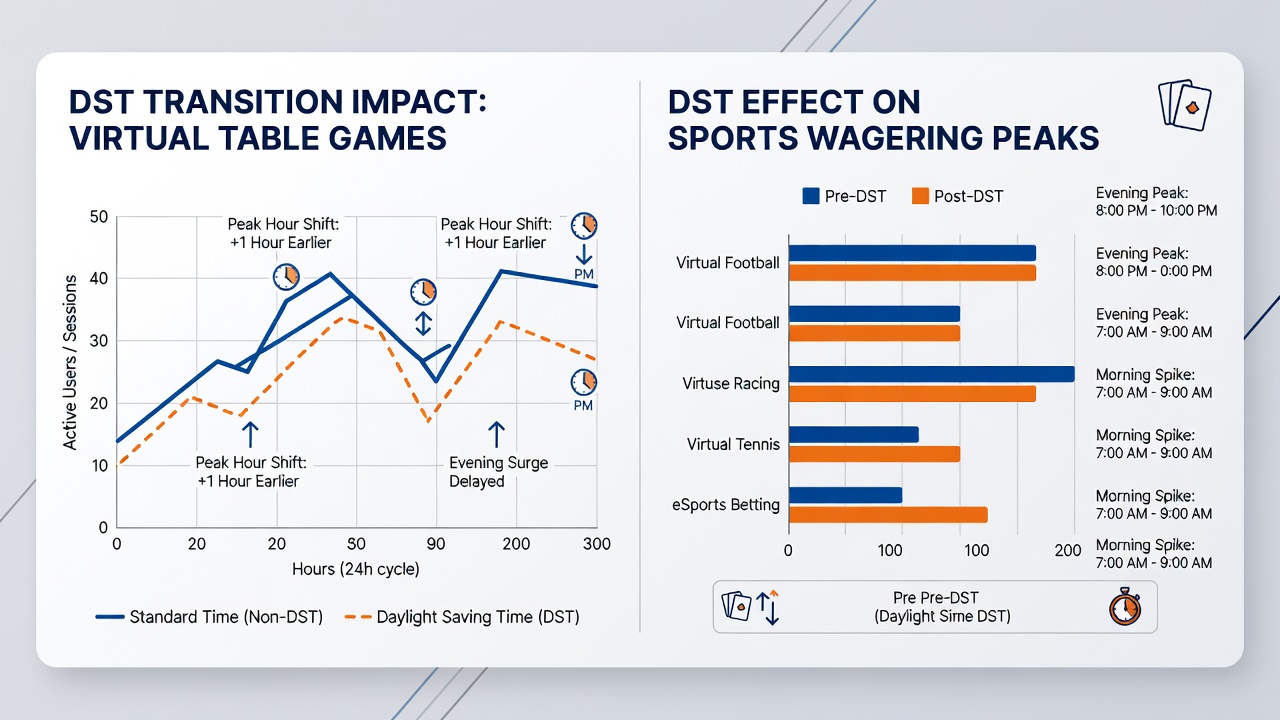
Virtual table game providers adjust server-side promotions and tournament schedules to match these moving peaks, while sportsbooks keep event-based odds feeds constant and instead modify deposit bonuses or cash-out windows to capture the relocated traffic. One study released by the University of Nevada, Las Vegas International Gaming Institute tracked anonymized session data from 12 major operators and found that the average time between sunset and first virtual blackjack hand shortened by 47 minutes after the fall back across Pacific Time users, whereas Eastern Time users showed a smaller 22-minute shift because their local sunset occurs earlier relative to national sports schedules.
Sports Wager Timing and Event Overlap
Live sports betting volumes depend on the alignment between match start times and bettor availability, so daylight saving transitions alter which games receive the heaviest in-play action. When the United States springs forward, West Coast bettors lose an hour of evening overlap with East Coast primetime football or basketball games, shifting a portion of wagers to earlier afternoon windows or to later international soccer and tennis markets that start after local midnight. European operators note the opposite effect during their October transition because their clocks move back while many American leagues remain on daylight time, creating temporary mismatches in cross-Atlantic betting flows. September 2026 sits between the spring and fall transitions in the Northern Hemisphere, giving analysts a stable baseline period to compare against the upcoming November change and to refine predictive models for the following March.
Multi-leg parlay and same-game parlay activity shows particular sensitivity because bettors often build those tickets in the hours immediately before events begin. When local clocks shift, the window for constructing complex bets narrows or widens, and operators have measured corresponding changes in average ticket size and number of legs selected. Platform logs indicate that the average number of active sports wager sessions per user increases for two to three days after a fall back as users explore the extended evening, then settles into a new rhythm once routines stabilize.
Table Game Session Length and Frequency Adjustments
Virtual table game participants tend to extend individual sessions when evenings lengthen after the fall back, while spring forward events correlate with shorter but more numerous sessions spread across additional days. Researchers examining sit-and-go and multi-table tournament participation found that registration spikes move by roughly the same one-hour offset as the clock change, although the total number of daily entrants remains stable because players simply select different start times. Cash game traffic in poker rooms displays the clearest redistribution, with mid-stakes tables experiencing the largest percentage movement because recreational players, who form the majority of that pool, adjust their schedules more readily than professionals who maintain fixed blocks regardless of clock position.
Payment processor records from the first weeks after each transition reveal temporary increases in deposit frequency during the newly favored hours, followed by a return to baseline distribution within 10 to 14 days. These patterns hold across desktop and mobile interfaces, although mobile traffic shows slightly faster adaptation because users receive push notifications that highlight new tournament start times aligned with the updated clock.
Conclusion
Daylight saving time transitions produce predictable, short-term redistributions of peak activity for virtual table games and sports wagers, with the magnitude of each shift varying by region, game type, and the direction of the clock change. Platform operators respond by realigning promotional timing and tournament schedules while keeping underlying event data constant. Continued monitoring through the September 2026 baseline period will allow further refinement of these models ahead of the November transition, providing clearer operational guidance for markets that observe the change.