Patterns of Multi-Platform Switching Among Participants in Global Poker Circuits During Periods of Regulatory Flux
Written by Hugo Lang · Aug 22, 2026
Patterns of Multi-Platform Switching Among Participants in Global Poker Circuits During Periods of Regulatory Flux
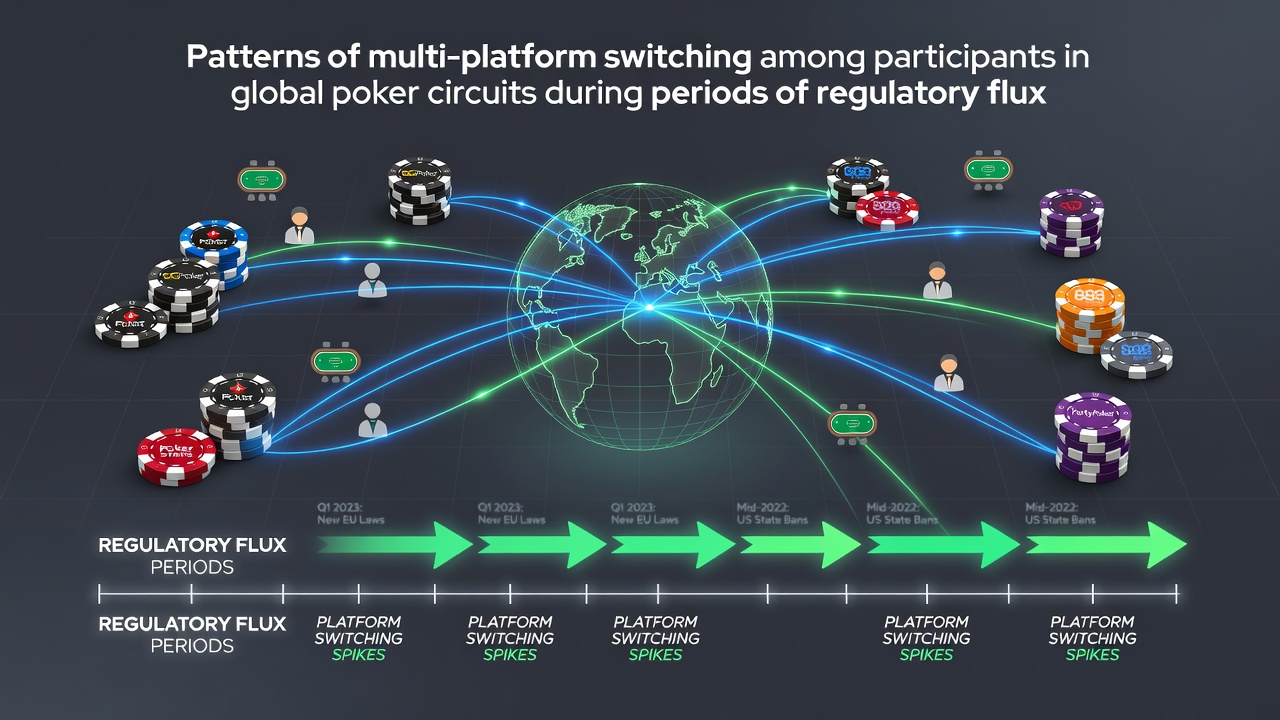
Regulatory changes across multiple jurisdictions continue to reshape how poker participants move between platforms, and observers note clear patterns emerging in August 2026. Data from various gaming oversight bodies shows increased activity on alternative sites whenever licensing rules tighten in one region while remaining stable in others. Participants often maintain accounts on several platforms simultaneously, and this behavior accelerates when new restrictions appear without warning.
Regulatory Shifts Across Key Markets
Changes in licensing requirements have hit different areas at different times this year, and participants respond by reallocating their play accordingly. In parts of Asia and Europe, updated compliance standards led operators to pause certain services, while North American and Australian markets saw expansions in permitted offerings. Researchers tracking these movements found that players who previously focused on one primary site began spreading activity across three or more platforms within weeks of each announcement.
Figures from the Australian Communications and Media Authority reveal a 28 percent rise in cross-border account registrations during the first half of 2026 compared with the same period in 2025, and similar trends appear in reports from the Ontario Lottery and Gaming Corporation. These increases coincide with periods when local operators faced new tax or verification rules, prompting participants to explore sites licensed elsewhere.
Observed Movement Between Online and Live Formats
Many participants combine online multi-table play with travel to major live circuits, and regulatory flux influences how they divide their time. When one jurisdiction restricts online cash games, activity often shifts toward live events in locations with more stable rules. Data tracking tools used by tournament organizers show that registration numbers for international stops fluctuate in direct relation to online policy announcements from the previous quarter.
One analysis conducted by the University of Nevada, Las Vegas gaming research group documented that players who faced platform limitations in their home region increased live tournament entries by an average of 19 percent within two months. This pattern repeats across circuits in the United States, Canada, and parts of Europe, where live events serve as reliable alternatives during online transitions.
Platform Loyalty and Account Distribution
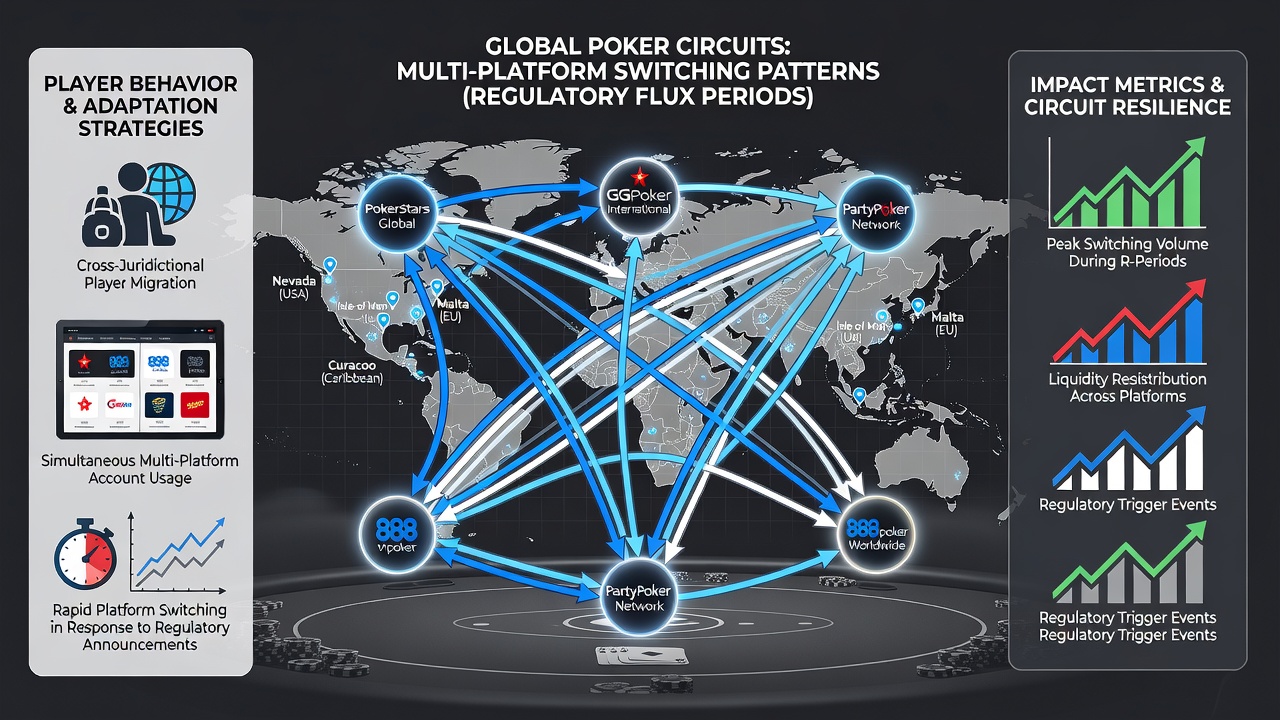
Participants rarely abandon platforms entirely even after restrictions appear, and instead they redistribute volume. Studies of user behavior indicate that most maintain primary accounts on two or three sites while keeping smaller balances on several others for quick access if rules change again. This approach allows continued participation without full reliance on any single operator or jurisdiction.
Industry reports compiled by the European Gaming and Betting Association note that multi-account holders represent a growing share of active poker traffic, particularly during periods when at least two major markets implement new verification protocols simultaneously. The data shows these users complete transfers between sites more rapidly than single-platform players, often within 48 hours of a regulatory announcement.
Timing and Triggers for Switches
Switches cluster around specific triggers rather than occurring randomly, and timing follows predictable windows. When a licensing body issues a new directive, increased traffic on alternative platforms appears within seven to ten days. August 2026 saw this pattern repeat after updates in two separate Asian markets, with researchers recording measurable upticks on sites licensed in Australia and certain European countries.
Payment method availability also influences decisions, and participants adjust quickly when banking options narrow in one region. Tracking data indicates that sites offering multiple currency and withdrawal methods attract redirected volume faster than those with limited choices, especially when regulatory pressure affects traditional processors.
Conclusion
Patterns of multi-platform switching reflect ongoing adaptation to regulatory environments that evolve at different rates across regions. Data from oversight agencies and academic tracking studies consistently show that participants respond to restrictions by expanding their account footprints and reallocating activity rather than exiting the circuits. These movements remain measurable through registration trends, tournament entries, and traffic reports, providing clear indicators of how global poker participation adjusts during periods of flux.