Mapping Seasonal Fluctuations in Live Poker Tournament Attendance Tied to Major Sporting Events
Written by Avery Bauer · Jul 27, 2026
Mapping Seasonal Fluctuations in Live Poker Tournament Attendance Tied to Major Sporting Events
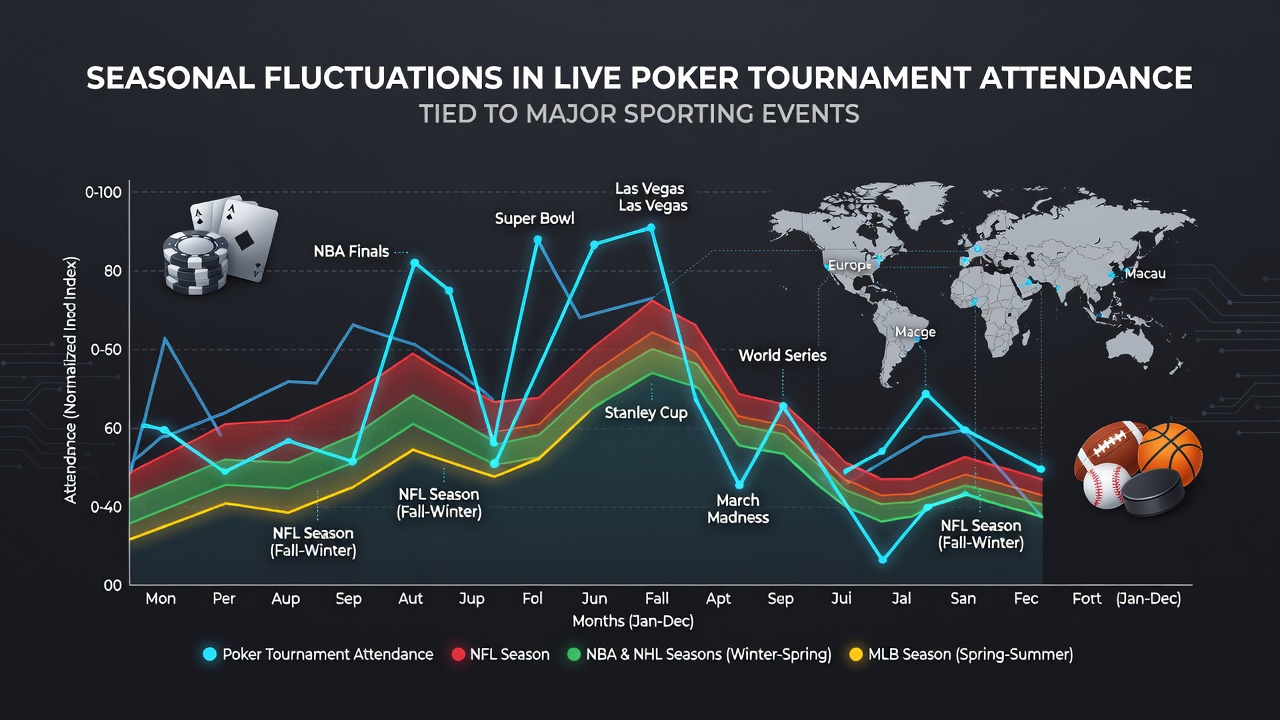
Live poker tournament attendance shows clear seasonal patterns that align with schedules from major sporting events, and researchers track these shifts through entry data collected from card rooms in Las Vegas, Atlantic City, and regional markets across North America. Data from multiple operators reveals consistent dips during high-profile football and basketball windows, while quieter periods between leagues often bring measurable increases in player registrations.
Tracking Attendance Patterns Through Event Calendars
Analysts combine tournament registration logs with sports calendars to identify correlations, and they note that Super Bowl weekend typically reduces live poker turnout by noticeable margins at properties that normally draw steady crowds. Venues report that players shift focus to viewing parties and sports betting terminals instead of multi-day events, which creates measurable gaps in Saturday and Sunday sessions. Similar patterns emerge during March Madness, where daily attendance figures drop as bracket competitions pull participants toward screens and sportsbooks rather than poker tables.
Those who compile multi-year datasets find that these reductions extend beyond single weekends, and the effects linger through the first week of the NCAA tournament when interest remains elevated. Operators in markets with strong local sports followings observe that midweek events suffer most, while weekend tournaments retain partial attendance from visitors who travel specifically for poker.
International Sporting Events and Cross-Market Effects
Global events produce parallel shifts in different regions, and the FIFA World Cup creates attendance swings in European and Asian card rooms that mirror North American patterns. Data collected during the 2022 tournament showed reduced entries at several UK and Australian venues during match days, with recovery occurring in the gaps between games. The upcoming 2026 FIFA World Cup, scheduled across North American host cities during June and July, is expected to generate comparable effects in Las Vegas and other poker hubs that attract international visitors.
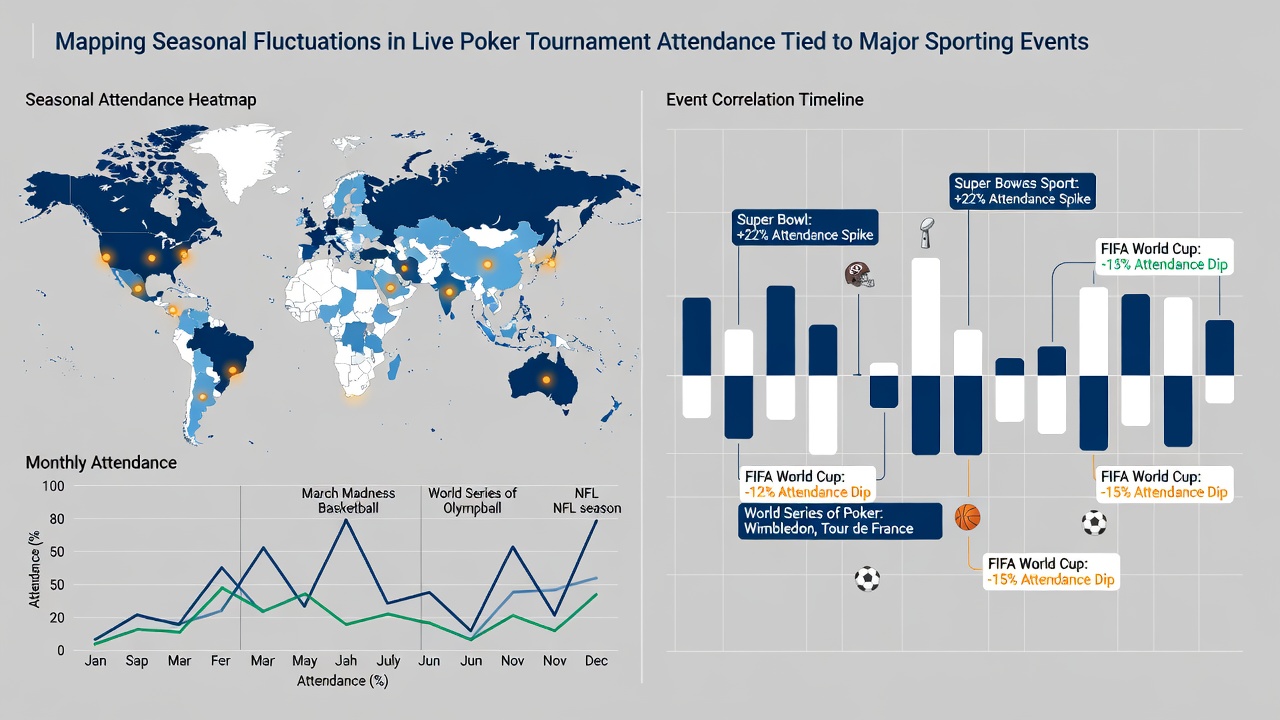
Observers note that the Olympics produce shorter but sharper disruptions, particularly during opening and closing ceremonies plus medal-heavy days in popular sports. Poker rooms located near major transit hubs record the largest temporary declines because traveling players adjust schedules around broadcast times.
Data Sources and Measurement Approaches
According to figures released by the Nevada Gaming Control Board, tournament entry volumes fluctuate in line with broader visitor patterns during marquee sports dates, though poker-specific tracking requires supplemental operator reports. Researchers cross-reference these numbers with public event calendars and mobile app check-in data to build more precise models. Academic studies from institutions examining gambling behavior, including work published through the University of Nevada's gaming research programs, document how attention diversion during live sports reduces participation in simultaneous poker formats.
Additional datasets from Canadian provincial gaming authorities and Australian state regulators provide comparative views, and these sources show similar seasonal alignments in markets where live poker operates alongside extensive sports betting options. Analysts combine these regional reports to create broader maps that highlight both declines and rebound periods.
July 2026 Context and Summer Scheduling
July 2026 falls during the middle of the FIFA World Cup schedule, and preliminary planning documents from major tournament organizers indicate adjusted calendars to account for expected attendance shifts. Venues in host cities anticipate lower midweek turnouts on match days while projecting stronger participation on rest days between group stage fixtures. Summer months outside major tournaments generally produce steadier poker attendance, yet the overlapping World Cup window introduces an additional variable that operators monitor through weekly registration reports.
Conclusion
Mapping these fluctuations requires ongoing collection of entry data across multiple venues and seasons, and the resulting patterns help operators anticipate demand around major sporting calendars. The evidence from regulatory reports and academic analyses confirms consistent relationships between live poker participation and prominent sports events, with recovery phases occurring once broadcast schedules conclude. Continued tracking through 2026 will refine these models as additional international competitions unfold.