Mapping how supply chain disruptions in manufacturing hubs alter entry fee affordability patterns for regional poker circuits in emerging markets
Written by Drew Schmitz · Oct 27, 2026
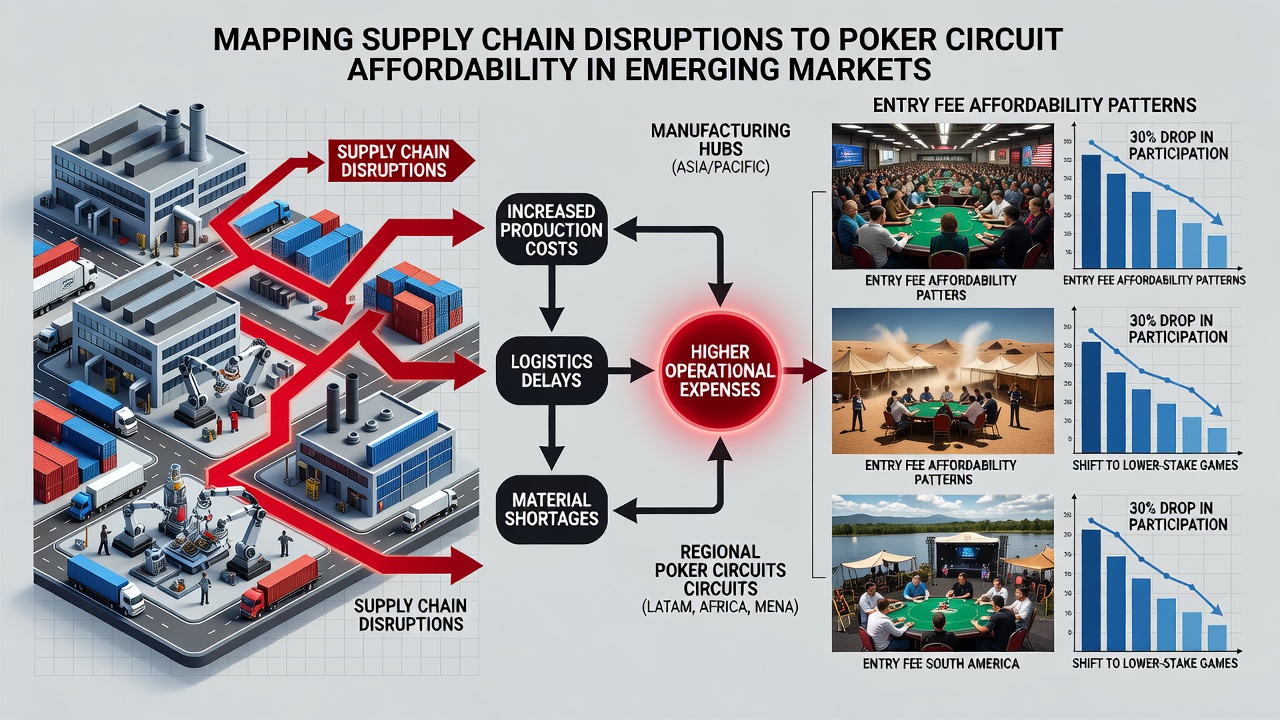
Mapping how supply chain disruptions in manufacturing hubs alter entry fee affordability patterns for regional poker circuits in emerging markets
Supply chain disruptions originating in major manufacturing hubs such as those in East Asia and parts of Latin America have produced measurable shifts in entry fee structures for regional poker circuits across several emerging markets since 2024, with data extending into October 2026 revealing continued adjustments in affordability thresholds. Manufacturing centers in Vietnam, Mexico, and coastal China experienced repeated interruptions from raw material shortages, port congestion, and logistics bottlenecks that elevated production costs for consumer goods and industrial components, effects that rippled outward to local economies dependent on import-export flows.
Economic transmission channels from hubs to local markets
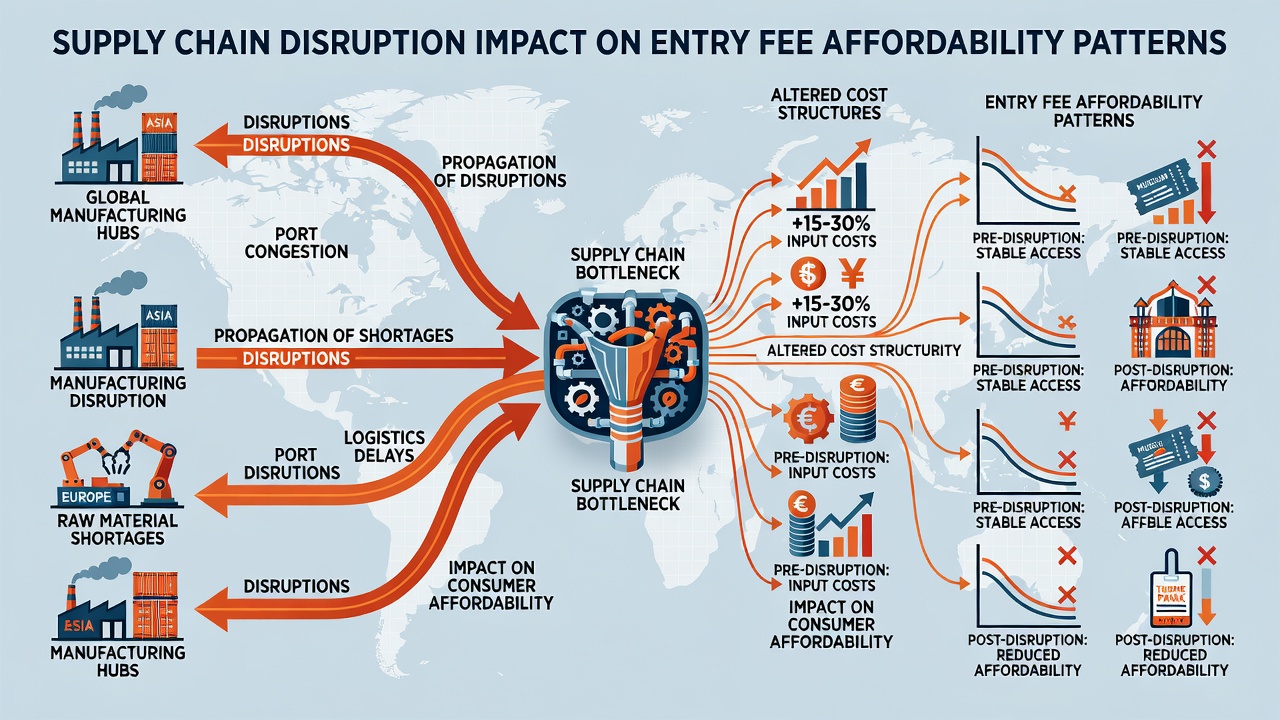
Observers tracking these patterns note that elevated costs for imported electronics, apparel, and machinery components reduced profit margins for small and medium enterprises in secondary cities, where many regional poker events take place. Currency fluctuations compounded the pressure when export revenues declined, leaving fewer resources available for discretionary spending categories that include tournament buy-ins. Data from trade monitoring agencies indicate average freight rate increases of 18 to 27 percent in affected corridors between early 2025 and mid-2026, correlating with reported declines in average entry fee collections at circuits operating in the Philippines, Indonesia, and Colombia.
Observed changes in entry fee structures and participation
Regional organizers responded by recalibrating fee tiers rather than canceling events outright. In circuits spanning Southeast Asian secondary cities, average buy-ins for mid-tier tournaments dropped from the equivalent of 85 USD in late 2024 to around 62 USD by October 2026, while satellite qualifiers offering lower entry points expanded to maintain volume. Similar recalibrations appeared in Latin American circuits, where organizers introduced staggered pricing that separated amateur and semi-professional brackets. Participation metrics compiled by local gaming associations show a 14 percent rise in lower-fee satellite entries offset by a 9 percent drop in direct main-event registrations over the same period, suggesting players shifted toward more affordable access points while overall circuit attendance held steady.
Regional variations and case examples
Patterns diverged across geographies because manufacturing exposure levels differed. Markets with heavier reliance on electronics assembly faced sharper disposable income compression than those centered on agricultural exports. One circuit in central Mexico documented a 22 percent reduction in players paying full entry fees above 120 USD after supply disruptions raised component prices for local auto parts suppliers, while a parallel circuit in northern Vietnam maintained steadier high-tier registration through increased use of installment payment options introduced in early 2026. Researchers examining these shifts highlight that venues near major ports experienced faster fee adjustments than inland locations, where logistics delays compounded inventory shortages for supporting businesses such as equipment vendors and hospitality providers.
Data correlations and external benchmarks
Cross-referenced figures from international development reports align with these localized observations. According to Asian Development Bank analyses, manufacturing output volatility in key hubs transmitted cost increases averaging 11 percent into household consumption baskets across connected emerging economies through the first three quarters of 2026. Parallel tracking by academic teams at institutions studying leisure expenditure in Latin America recorded corresponding compression in entertainment budgets, with poker-related outlays listed among categories showing the earliest measurable contraction. These benchmarks help explain why circuit operators prioritized fee flexibility over fixed pricing models that had prevailed prior to the disruptions.
Adaptation mechanisms employed by circuits
Operators adopted several operational responses to sustain viability. Expanded online registration platforms reduced overhead, allowing smaller portions of entry fees to cover administrative costs. Partnerships with local sponsors offset prize pools, which in turn permitted lower minimum buy-ins without eroding payout structures. In several documented cases, circuits introduced dynamic pricing algorithms that adjusted fees weekly based on registration velocity, a tactic that stabilized attendance numbers even as underlying economic pressures persisted into October 2026. Evidence from operator surveys indicates these mechanisms preserved circuit continuity while redistributing affordability across player segments rather than eliminating higher-stakes options entirely.
Conclusion
Supply chain disruptions in primary manufacturing hubs have produced documented, geographically varied effects on entry fee affordability within regional poker circuits operating in emerging markets, with adjustments continuing through October 2026. Fee recalibrations, expanded satellite formats, and dynamic pricing represent observable responses that maintain participation levels amid shifting economic conditions. Ongoing monitoring by trade and development organizations provides external reference points that connect manufacturing volatility to leisure spending patterns, offering a factual basis for understanding these evolving dynamics without reliance on unsubstantiated projections.