How Social Media Sentiment Analysis Reshapes Real-Time Odds Adjustments by Bookmakers in Major Sports Betting Markets
Written by Felix Bauer · Aug 26, 2026
How Social Media Sentiment Analysis Reshapes Real-Time Odds Adjustments by Bookmakers in Major Sports Betting Markets
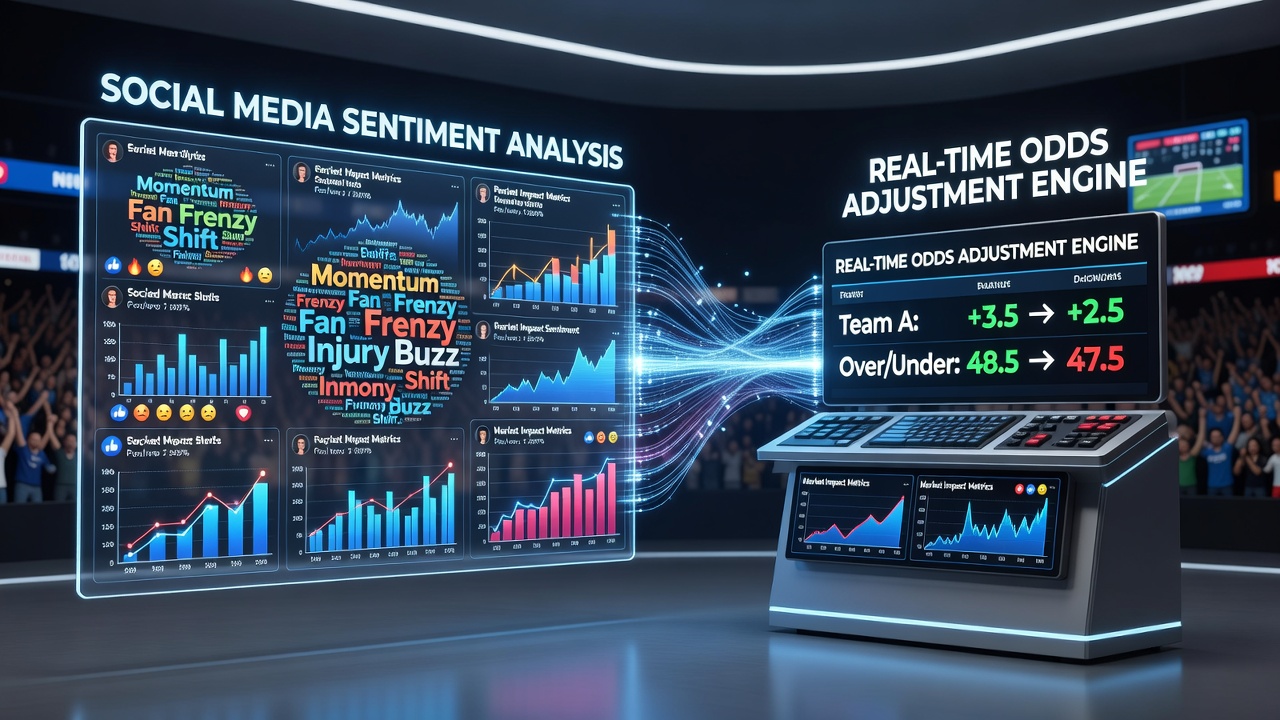
Bookmakers in major sports betting markets now integrate social media sentiment analysis into their odds systems on a routine basis, and this practice has accelerated through 2026 as platforms generate continuous streams of public commentary. Data from betting operators shows that algorithms scan posts on X, Facebook, and Instagram to detect shifts in fan mood, injury rumors, and team performance perceptions before those factors appear in traditional statistics. One study from the UNLV International Gaming Institute found that sentiment scores derived from millions of tweets can precede line movements by several minutes during high-profile games, giving operators a window to recalibrate prices in real time.
Mechanics of Sentiment Integration
Operators feed raw social data into natural language processing models that assign positive, negative, or neutral values to each mention, then aggregate those scores across geographic regions and demographic segments. When a sudden spike in negative commentary about a starting quarterback emerges on game day, for instance, the system flags the signal and forwards it to risk management teams who decide whether to shorten or lengthen the spread within seconds. Australian research published in the Journal of Gambling Studies documented similar patterns during NRL matches, where sentiment drops correlated with immediate adjustments in live betting markets.
Bookmakers combine these signals with conventional inputs such as player tracking data and historical performance, yet the social layer adds a layer of predictive texture that pure numbers often miss. In August 2026, several major operators reported that social sentiment accounted for up to 18 percent of variance in their live odds during NFL preseason games, a figure that had risen steadily from earlier years. The process runs continuously, with models retraining on fresh data every few minutes to stay aligned with rapidly evolving conversations.
Live Market Examples Across Regions
European soccer leagues provide one of the clearest demonstrations of this approach in action. During a Premier League match in the spring of 2026, a surge of posts questioning a striker's fitness prompted multiple operators to move the over/under total downward before kickoff, even though official team news had not yet confirmed the issue. Observers note that similar adjustments now occur across NBA, MLB, and tennis markets, where player form rumors travel fastest on social channels. Those who've examined the data find that markets with higher social volume tend to stabilize more quickly once sentiment aligns with on-field results.
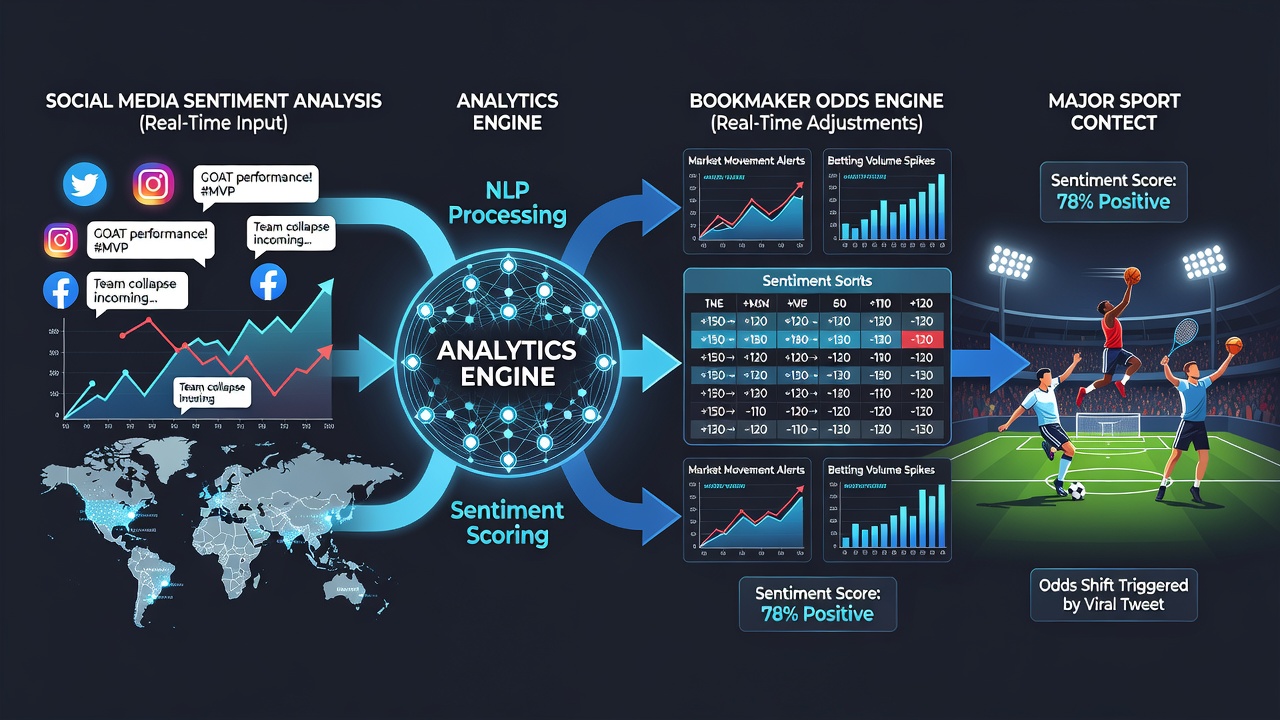
North American operators have adopted comparable systems, particularly in states where mobile betting expanded rapidly after 2018. One analysis conducted by researchers at the University of Nevada, Las Vegas, tracked line changes in Nevada sportsbooks and found that sentiment-driven moves occurred in roughly one out of every four major college football games during the 2025 season. The adjustments typically ranged between half a point and a full point on spreads, enough to influence sharp bettors who monitor multiple books simultaneously.
Data Sources and Processing Scale
Processing volumes reach millions of posts per hour during marquee events, which requires operators to maintain dedicated data pipelines and partnerships with social analytics firms. According to figures released by the American Gaming Association, the largest betting companies now allocate specialized teams to oversee these feeds, and those teams coordinate directly with trading desks that update odds. The speed of response has become a competitive factor, since markets that lag behind sentiment shifts can attract disproportionate liability from informed bettors.
Regional differences appear in how operators weight various platforms. Markets in Asia often emphasize messaging apps and local forums alongside global networks, while North American and European books focus more heavily on English-language Twitter activity. Yet the core methodology remains consistent: convert unstructured text into numerical scores, cross-reference those scores with betting volume, and trigger automated or semi-automated odds revisions when thresholds are crossed.
Regulatory Context and Industry Standards
Regulators in several jurisdictions have begun examining how sentiment tools interact with responsible gambling requirements, though formal rules remain limited. The Nevada Gaming Control Board has requested periodic reports on algorithmic decision-making from licensed operators, while Canadian provincial regulators have requested similar disclosures in provinces that permit online sports wagering. Industry groups such as the World Lottery Association have published voluntary guidelines that encourage transparency around data sources, though adoption varies by operator.
Conclusion
Social media sentiment analysis has become an established component of real-time odds management across major betting markets, and its influence continues to grow as data volumes and processing capabilities expand. Bookmakers rely on these systems to detect emerging narratives faster than traditional indicators alone would allow, which in turn shapes the prices offered to the public during live events. As of August 2026, the practice shows no signs of slowing, with operators refining models to handle multilingual content and emerging platforms while maintaining compliance with evolving oversight frameworks.